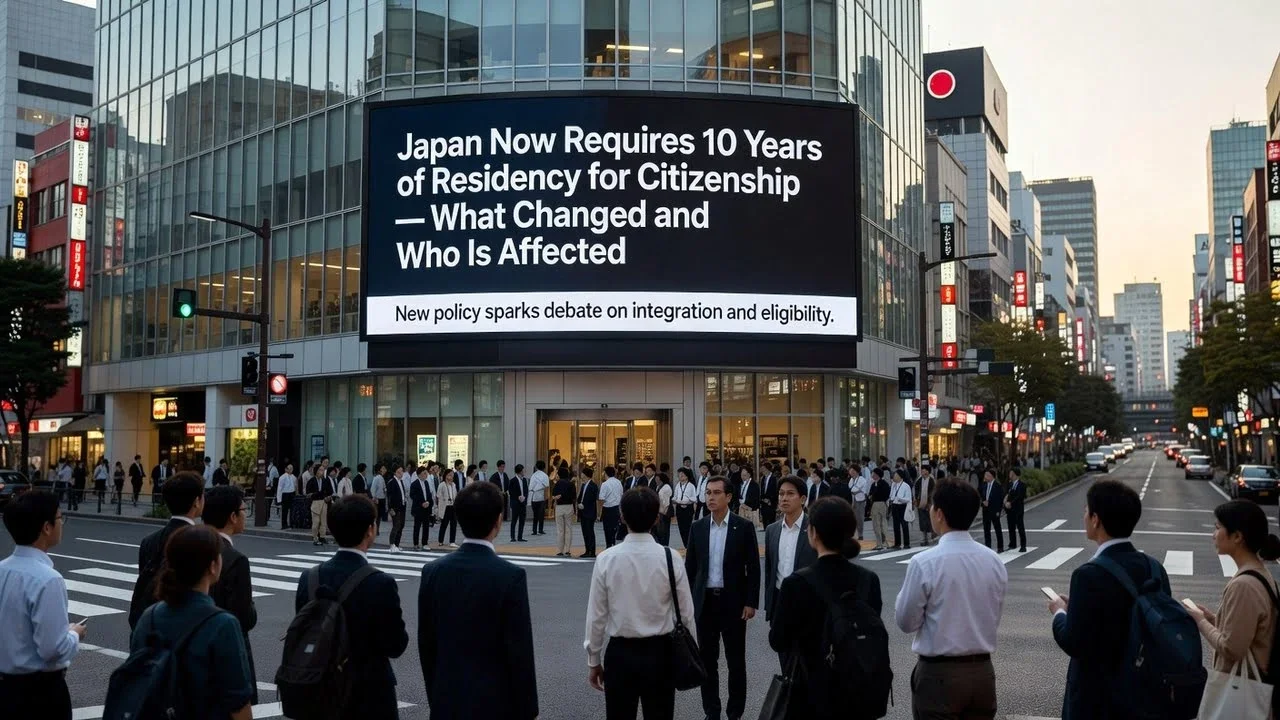
Japan just made one of the most significant changes to its naturalization rules in decades. From April 1, 2026, the minimum residency requirement for Japanese citizenship has doubled — from five consecutive years to ten. GaijinBlog If you were planning to apply for citizenship based on the old rules, your timeline just got a lot longer.
Here’s everything you need to know about what changed, why it happened, and what it means for you.
What Exactly Changed
Under revised guidelines announced on March 27, 2026, naturalization applicants must now submit two years of tax and social insurance payment records and five years of tax payment certificates. The Japan Times
In practical terms, here is what applicants now need to demonstrate:
- 10 consecutive years of legal residency in Japan (previously 5 years)
- 5 years of tax payment certificates
- 2 years of social insurance payment records
- Proof of financial stability and integration into Japanese society
These changes are not amendments to Japan’s Nationality Act itself, but rather revisions to administrative screening practice — however, the practical impact is expected to be very significant. Visajapan
Why Did Japan Make This Change
The Justice Ministry confirmed the overhaul, stating that naturalization criteria will now be aligned with the stricter standards required for permanent residency. This move is designed to ensure only those who have demonstrated long-term commitment, financial responsibility, and integration into Japanese society can obtain citizenship. Visasupdate
In simpler terms, Japan noticed a gap in its system. Getting citizenship was actually easier than getting permanent residency — which made little logical sense. The changes are intended to address concerns that obtaining Japanese nationality had been easier than securing permanent residency. The Japan Times
Japan is also grappling with one of the world’s most severe demographic crises — its population has fallen below 123 million and continues to shrink, while the birth rate remains stuck at around 1.2 children per woman. Despite these challenges, the government has opted for a cautious approach to naturalization rather than a broad opening of immigration pathways. Visasupdate
Does This Affect Applications Already Submitted?
This is one of the most important questions — and the answer may surprise you.
Yes. The Ministry of Justice policy clarifies that the new rules apply to all applications whose results are released after the policy takes effect. If your application was submitted before April 1 but has not yet been decided, it will be assessed against the new ten-year standard and the extended tax and social insurance review periods. GaijinBlog
If you are in this situation, the advice is to contact your handling Legal Affairs Bureau directly as soon as possible.
Are There Any Exceptions?
Yes — not everyone is subject to the full 10-year requirement.
The ten-year standard applies to the general naturalization track. Reduced-residency pathways remain in place for specific situations. If you are married to a Japanese citizen, the residency requirement reduces to three years of marriage plus one year of residence in Japan, or three years of continuous residence in Japan if you have been married for at least three years. These reduced pathways were not eliminated in the April 2026 revision. GaijinBlog
Other exceptions may apply to individuals with Japanese ancestry or those born in Japan. Consulting a licensed immigration lawyer is strongly recommended for anyone in a non-standard situation.
How This Affects Long-Term Residents and Workers
Foreign workers have been an essential part of Japan’s economy, especially in industries such as technology, manufacturing, and hospitality. The increase in the residency requirement could influence the decisions of those seeking long-term employment opportunities in Japan. Travel And Tour World
For those already living in Japan with plans to eventually naturalize, this change requires a serious rethink of timelines — particularly around:
- Long-term financial planning and savings
- Property purchase decisions
- Family relocation plans
- Maintaining consistent tax and insurance records every single year
In 2025, over 9,200 foreign nationals were granted Japanese citizenship, with Chinese and South Korean nationals representing the largest share of new citizens. Travel And Tour World That number is expected to drop significantly in the coming years as the new requirements take effect.
What You Should Do Right Now
If you are currently living in Japan or planning to, here are practical steps to take:
1. Check your residency timeline Count how many years of continuous legal residency you currently have. The clock needs to reach 10 years under the new rules.
2. Keep your tax records clean Make sure you have filed and paid taxes consistently. You will need to show 5 years of tax payment certificates.
3. Stay enrolled in social insurance Gaps in health insurance or pension payments can now hurt your application. Ensure you have 2 clean years of records.
4. Consider permanent residency first If you already qualify or nearly qualify for permanent residency, that may be the more logical intermediate step before citizenship. GaijinBlog
5. Consult an immigration lawyer Given the complexity of the new rules, professional legal advice is more valuable than ever. A specialist can map out your exact timeline and flag any risks before you apply.
The Bottom Line
Japan’s decision to raise the citizenship residency bar to 10 years sends a clear signal: becoming a Japanese citizen now demands a much deeper, longer-term commitment. For some, this is a major setback. For others already well into their residency journey, it is simply a longer road to the same destination.
Either way, the best thing you can do is start planning early, keep your documents in order, and stay informed about further policy updates.
Follow Zeramart.shop for the latest visa and residency news from around the world.